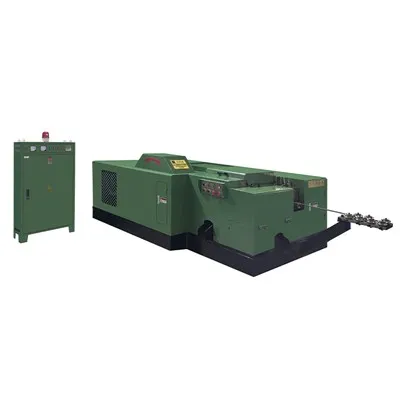
As a supplier of Cold Heading Fasteners Machines, I am often asked about the cooling system of these machines. In this blog, I will delve into what the cooling system of a Cold Heading Fasteners Machine is, its importance, and how it functions.
What is a Cold Heading Fasteners Machine?
Before we dive into the cooling system, let's briefly understand what a Cold Heading Fasteners Machine is. Cold heading is a manufacturing process in which metal wire is formed into fasteners such as bolts, screws, and rivets at room temperature. Cold Heading Fasteners Machines are designed to perform this process efficiently and precisely. These machines use high - pressure forces to reshape the metal wire without the need for heating, which results in a stronger and more cost - effective production of fasteners.
There are different types of Cold Heading Fasteners Machines available in the market, such as Cold Forging Header, Cold Forging Press Heading Machine, and Cold Forging Header Machine. Each type has its own unique features and capabilities, but they all rely on a proper cooling system to function optimally.
The Importance of the Cooling System
The cooling system in a Cold Heading Fasteners Machine plays a crucial role in the overall performance and longevity of the machine. During the cold heading process, a significant amount of heat is generated due to the high - pressure forces applied to the metal wire. If this heat is not properly dissipated, it can lead to several problems.
Firstly, excessive heat can cause the metal tools and dies used in the machine to expand. This expansion can lead to dimensional inaccuracies in the fasteners being produced, resulting in defective products. Secondly, high temperatures can accelerate the wear and tear of the machine components. The heat can cause the lubricants to break down, leading to increased friction and damage to the moving parts. This can reduce the lifespan of the machine and increase maintenance costs.
Moreover, a well - functioning cooling system helps to maintain a stable operating temperature for the machine. This is essential for ensuring consistent quality in the fasteners production. A stable temperature environment allows for more precise control over the cold heading process, resulting in fasteners with accurate dimensions and mechanical properties.
Components of the Cooling System
The cooling system of a Cold Heading Fasteners Machine typically consists of several key components:
Coolant Reservoir
The coolant reservoir is a container that holds the coolant, which is usually a mixture of water and additives. The coolant is responsible for absorbing the heat generated during the cold heading process. The size of the coolant reservoir depends on the size and capacity of the machine. A larger machine may require a larger reservoir to ensure an adequate supply of coolant.
Pumps
Pumps are used to circulate the coolant throughout the machine. They draw the coolant from the reservoir and send it to the areas where heat needs to be dissipated, such as the dies and the working areas of the machine. The pumps ensure a continuous flow of coolant, which is essential for effective heat transfer.
Heat Exchangers
Heat exchangers are devices that transfer heat from the coolant to the surrounding environment. There are different types of heat exchangers, such as air - cooled and water - cooled heat exchangers. Air - cooled heat exchangers use fans to blow air over the hot coolant, while water - cooled heat exchangers use a separate water circuit to remove the heat from the coolant.
Temperature Sensors
Temperature sensors are installed in the machine to monitor the temperature of the coolant and the machine components. These sensors send signals to the control system, which can then adjust the flow of coolant or the operation of the cooling system to maintain the desired temperature.
How the Cooling System Works
The cooling system works in a continuous cycle to keep the Cold Heading Fasteners Machine at a safe operating temperature. Here's a step - by - step breakdown of the process:
-
Coolant Circulation: The pump draws the coolant from the reservoir and sends it to the areas of the machine where heat is generated. The coolant absorbs the heat from the metal tools, dies, and other components.
-
Heat Transfer: As the coolant absorbs the heat, it becomes hot. The hot coolant then flows to the heat exchanger. In the heat exchanger, the heat is transferred from the coolant to the surrounding environment. In an air - cooled heat exchanger, fans blow air over the hot coolant, causing the heat to dissipate. In a water - cooled heat exchanger, the hot coolant is cooled by a separate water circuit.
-
Coolant Return: After the heat has been removed from the coolant, it returns to the reservoir. The cooled coolant is then ready to be recirculated through the machine to absorb more heat.
-
Temperature Control: The temperature sensors continuously monitor the temperature of the coolant and the machine components. If the temperature exceeds the set limit, the control system can increase the flow of coolant or adjust the operation of the heat exchanger to bring the temperature back to the desired level.
Maintenance of the Cooling System
Proper maintenance of the cooling system is essential for the efficient operation of the Cold Heading Fasteners Machine. Here are some maintenance tips:
- Regularly Check the Coolant Level: The coolant level in the reservoir should be checked regularly. If the level is low, more coolant should be added to ensure an adequate supply.
- Inspect the Coolant Quality: The quality of the coolant should be inspected regularly. Over time, the coolant can become contaminated with debris and metal particles. If the coolant is dirty, it should be replaced to prevent damage to the machine components.
- Clean the Heat Exchanger: The heat exchanger should be cleaned regularly to remove any dirt or debris that may accumulate on its surface. A dirty heat exchanger can reduce the efficiency of the cooling system.
- Check the Pumps and Hoses: The pumps and hoses in the cooling system should be checked for any signs of leaks or damage. If a pump or hose is damaged, it should be replaced immediately to prevent coolant loss.
Conclusion
In conclusion, the cooling system of a Cold Heading Fasteners Machine is a critical component that ensures the machine operates at an optimal temperature. By effectively dissipating the heat generated during the cold heading process, the cooling system helps to maintain the quality of the fasteners produced and extends the lifespan of the machine.


If you are in the market for a Cold Heading Fasteners Machine or need to upgrade your existing cooling system, we are here to help. Our team of experts can provide you with the best solutions tailored to your specific needs. Contact us today to start a discussion about your requirements and explore how our Cold Heading Fasteners Machines can benefit your business.
References
- "Cold Heading Technology Handbook", Industry Press, 2020
- "Manufacturing Processes for Engineering Materials", Pearson Education, 2019