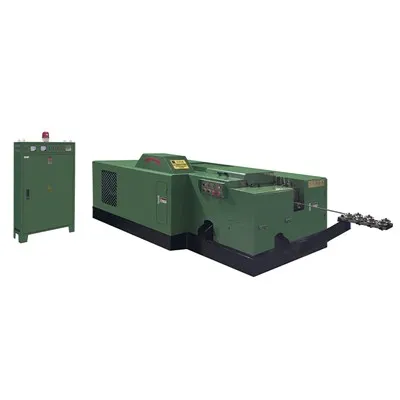
When it comes to manufacturing fasteners, bolts, and other precision metal parts, a cold heading machine is an indispensable piece of equipment. As a cold heading machine supplier, I understand the challenges that manufacturers face when choosing the right machine for their specific needs. In this blog post, I will share some key factors to consider when selecting a cold heading machine to ensure you make an informed decision.
1. Production Requirements
The first step in choosing the right cold heading machine is to assess your production requirements. Consider the following aspects:
- Volume: Determine the number of parts you need to produce per hour, day, or week. High - volume production requires a machine with high - speed capabilities and reliable performance. For example, if you are producing thousands of small fasteners daily, you will need a machine that can operate at a high cycle rate.
- Part Size and Complexity: The size and complexity of the parts you plan to produce play a crucial role. Different cold heading machines are designed to handle various part sizes, from small pins to large bolts. If you need to produce complex parts with multiple forming stages, you may require a machine with more stations and advanced forming capabilities.
2. Machine Types
There are different types of cold heading machines available in the market, each with its own advantages and limitations.
- Automatic Cold Heading Machine: Automatic Cold Heading Machine is a popular choice for medium - to high - volume production. These machines can perform multiple operations automatically, such as feeding, cutting, and forming. They are suitable for producing a wide range of parts, including screws, nuts, and rivets.
- Full Automatic Cold Heading Machine: Full Automatic Cold Heading Machine takes automation to the next level. These machines are equipped with advanced control systems that can handle the entire production process, from raw material feeding to finished part output. They are ideal for large - scale production and can significantly increase productivity.
- Cold Forging Header: Cold Forging Header is used for more complex forging operations. It can produce parts with high strength and precision. Cold forging headers are often used in industries such as automotive and aerospace, where high - quality parts are required.
3. Machine Features
When evaluating a cold heading machine, pay attention to the following features:


- Stations: The number of stations on a cold heading machine determines the number of forming operations that can be performed. More stations allow for more complex part designs. For example, a 4 - station machine can perform four different forming operations in sequence, while a 6 - station machine offers even more flexibility.
- Material Handling: Efficient material handling is essential for smooth production. Look for a machine with a reliable feeding system that can handle different types of materials, such as wire, rod, or bar stock. Some machines also have automatic lubrication systems to ensure proper material flow and reduce wear on the tooling.
- Tooling Compatibility: The machine should be compatible with a wide range of tooling. This allows you to produce different types of parts without having to invest in a new machine. Make sure the tooling is easy to change and maintain.
4. Quality and Reliability
The quality and reliability of the cold heading machine are crucial for long - term operation.
- Build Quality: A well - built machine is more likely to withstand the rigors of continuous production. Look for machines made from high - quality materials and with a solid construction. Check the machining accuracy and the quality of the components, such as the drive system, gears, and bearings.
- Brand Reputation: Choose a machine from a reputable manufacturer. A well - established brand is more likely to provide reliable products and good after - sales service. Research the manufacturer's history, customer reviews, and industry reputation.
- Warranty and Support: A good warranty and after - sales support are essential. Make sure the manufacturer offers a reasonable warranty period and has a responsive customer service team. This will give you peace of mind in case of any issues with the machine.
5. Cost Considerations
Cost is an important factor when choosing a cold heading machine.
- Purchase Price: Compare the prices of different machines from various manufacturers. However, don't just focus on the initial purchase price. Consider the long - term cost of ownership, including maintenance, tooling, and energy consumption.
- Operating Costs: Some machines may have higher operating costs due to factors such as energy consumption, tooling wear, and maintenance requirements. Look for a machine that is energy - efficient and has low - cost tooling options.
- Return on Investment (ROI): Calculate the ROI of the machine based on your production volume and the selling price of the parts. A machine that can increase productivity and reduce production costs will have a higher ROI.
6. Training and Technical Support
Proper training and technical support are essential for the successful operation of a cold heading machine.
- Training: The manufacturer should provide comprehensive training for your operators. This includes training on machine operation, maintenance, and troubleshooting. Well - trained operators can ensure the machine runs smoothly and efficiently.
- Technical Support: In case of any technical issues, you need to have access to reliable technical support. The manufacturer should have a team of experienced technicians who can provide timely assistance.
7. Future Expansion
Consider your future production needs when choosing a cold heading machine.
- Scalability: Choose a machine that can be easily upgraded or expanded. This will allow you to increase your production capacity as your business grows. For example, some machines can be equipped with additional stations or automation features in the future.
- Compatibility with New Technologies: Look for a machine that is compatible with the latest technologies, such as Industry 4.0. This will enable you to integrate the machine into your smart factory and improve overall production efficiency.
In conclusion, choosing the right cold heading machine requires careful consideration of your production requirements, machine types, features, quality, cost, training, and future expansion needs. As a cold heading machine supplier, we are committed to helping you find the best machine for your specific needs. If you have any questions or need further information, please feel free to contact us for a detailed consultation. We look forward to working with you to enhance your production capabilities.
References
- Smith, J. (2020). "Cold Heading Machine Technology and Applications". Manufacturing Journal.
- Brown, A. (2019). "Guide to Selecting Cold Heading Machines". Industrial Equipment Magazine.