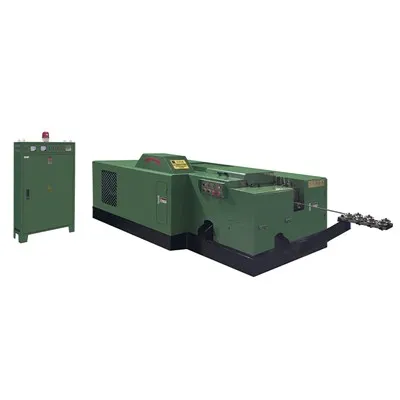
Hey there! As a supplier of Nut Bolt Banane Wali Machines, I often get asked about how to calibrate these machines. It's a crucial process that can significantly impact the quality and efficiency of your nut and bolt production. So, let's dive right into it.


Understanding the Basics
Before we start with the calibration process, it's important to understand what a Nut Bolt Banane Wali Machine does. These machines are designed to manufacture nuts and bolts with precision. They work by taking raw materials and shaping them into the desired nut or bolt forms.
Why Calibration is Important
Calibration ensures that your machine is operating at its optimal level. When a Nut Bolt Banane Wali Machine is properly calibrated, it can produce nuts and bolts that meet the required specifications. This means fewer defective products, less waste, and higher productivity.
Tools You'll Need
To calibrate your Nut Bolt Banane Wali Machine, you'll need a few tools. These include a micrometer for measuring the dimensions of the nuts and bolts, a torque wrench to ensure proper tightening, and a set of feeler gauges to check clearances.
Step-by-Step Calibration Process
1. Check the Machine's Alignment
The first step in calibration is to check the alignment of the machine. Misalignment can lead to uneven wear and tear on the machine's components, as well as inaccurate production. Use a straightedge to check the alignment of the various parts of the machine, such as the dies and the feed mechanism. If you find any misalignment, adjust the parts accordingly.
2. Set the Die Clearance
The die clearance is the space between the dies in the machine. This clearance is crucial for ensuring that the nuts and bolts are formed correctly. Use feeler gauges to measure the die clearance and adjust it as needed. The ideal clearance will depend on the size and type of nuts and bolts you're producing.
3. Adjust the Feed Mechanism
The feed mechanism is responsible for feeding the raw materials into the machine. It's important to ensure that the feed mechanism is calibrated correctly so that the materials are fed at the right rate and in the right position. Check the speed and accuracy of the feed mechanism and make any necessary adjustments.
4. Calibrate the Torque Settings
The torque settings on the machine determine how tightly the nuts and bolts are tightened. Use a torque wrench to measure the torque and adjust the settings as needed. The correct torque settings will depend on the size and type of nuts and bolts you're producing, as well as the application they'll be used for.
5. Test the Machine
Once you've completed the calibration process, it's important to test the machine to ensure that it's working correctly. Run a few test cycles and check the quality of the nuts and bolts produced. If you notice any issues, go back and make further adjustments.
Common Calibration Issues and How to Fix Them
1. Inconsistent Nut and Bolt Dimensions
If you're getting inconsistent nut and bolt dimensions, it could be due to a problem with the die clearance or the feed mechanism. Check the die clearance and adjust it if necessary. Also, make sure that the feed mechanism is feeding the materials consistently.
2. Loose or Over-Tightened Nuts and Bolts
If the nuts and bolts are coming out too loose or too tight, it could be due to incorrect torque settings. Use a torque wrench to check and adjust the torque settings.
3. Machine Vibration
Excessive machine vibration can cause problems with the calibration and the quality of the products. Check the machine's alignment and make sure that all the components are properly tightened. If the vibration persists, it could be a sign of a more serious problem, and you may need to consult a professional.
Related Machines
If you're in the market for other machines related to nut and bolt production, we also offer Bolt Forging Machine, Ss Nut Bolt Manufacturing Machine, and Nut Bolt Washer Making Machine. These machines can complement your Nut Bolt Banane Wali Machine and help you expand your production capabilities.
Conclusion
Calibrating a Nut Bolt Banane Wali Machine is a crucial process that requires attention to detail and the right tools. By following the steps outlined in this blog, you can ensure that your machine is operating at its best and producing high-quality nuts and bolts. If you have any questions or need further assistance with calibration or any other aspect of our machines, don't hesitate to reach out. We're here to help you get the most out of your equipment and take your nut and bolt production to the next level.
References
- "Machinery Handbook" by Industrial Press Inc.
- "Manufacturing Engineering and Technology" by Serope Kalpakjian and Steven Schmid