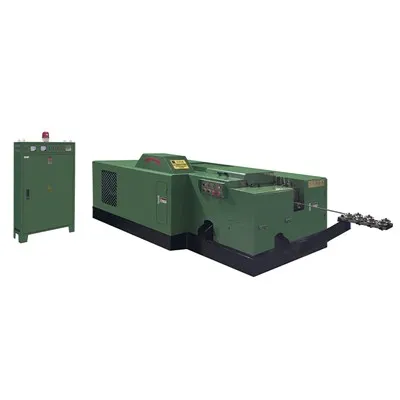
Production efficiency is a crucial metric in the manufacturing industry, especially when it comes to cold forge header machines. As a supplier of Cold Forge Header Machines, I've witnessed firsthand the transformative impact these machines can have on production lines. In this blog, we'll explore the concept of production efficiency in the context of cold forge header machines, examining the factors that influence it and how our machines can help businesses achieve optimal results.
Understanding Cold Forge Header Machines
Cold forge header machines are used to create metal parts through a process known as cold forging. This process involves shaping metal at room temperature, using high pressure to deform the material into the desired shape. Cold forging offers several advantages over other manufacturing methods, including increased strength, improved surface finish, and reduced material waste.
Our Cold Head Machine is designed to meet the diverse needs of modern manufacturing. Whether you're producing small fasteners or large automotive components, our machines can handle the task with precision and efficiency. With advanced features and cutting-edge technology, our cold forge header machines are built to deliver consistent results, day in and day out.
Factors Affecting Production Efficiency
Several factors can influence the production efficiency of a cold forge header machine. Understanding these factors is essential for optimizing the performance of your machine and maximizing your output.
Machine Design and Technology
The design and technology of the cold forge header machine play a significant role in its production efficiency. Modern machines are equipped with advanced features such as automated feeding systems, multi-station tooling, and high-speed operation. These features allow for faster production cycles and reduced downtime, resulting in increased productivity.
Our Double Stroke Cold Head Forging Machine is a prime example of how advanced technology can enhance production efficiency. With its double-stroke design, this machine can perform two forging operations in a single cycle, effectively doubling the output compared to traditional single-stroke machines.
Material Selection
The choice of material can also impact the production efficiency of a cold forge header machine. Different materials have different properties, such as hardness, ductility, and flow characteristics, which can affect the forging process. Selecting the right material for your application is crucial for achieving optimal results.
We offer a wide range of cold forging materials, including steel, aluminum, brass, and copper. Our experts can help you choose the right material based on your specific requirements, ensuring that your production process is efficient and cost-effective.
Tooling and Die Design
The quality of the tooling and die design is another critical factor in production efficiency. Well-designed tooling and dies can reduce the number of operations required to produce a part, minimize material waste, and improve the overall quality of the finished product.
Our team of experienced tooling designers uses the latest CAD/CAM technology to create custom tooling and dies that are optimized for your specific application. We also offer tooling maintenance and repair services to ensure that your tools and dies are always in top condition, maximizing their lifespan and performance.
Operator Training and Skill
The skill and training of the machine operator can have a significant impact on production efficiency. A well-trained operator can operate the machine more efficiently, troubleshoot problems quickly, and make adjustments to optimize the production process.


We provide comprehensive training programs for our customers, covering everything from machine operation and maintenance to tooling setup and troubleshooting. Our training programs are designed to ensure that your operators have the skills and knowledge they need to operate our machines safely and efficiently.
Measuring Production Efficiency
To measure the production efficiency of a cold forge header machine, several key performance indicators (KPIs) can be used. These KPIs provide valuable insights into the performance of the machine and can help identify areas for improvement.
Cycle Time
Cycle time is the time it takes for the machine to complete one full production cycle, from the loading of the raw material to the ejection of the finished part. A shorter cycle time indicates higher production efficiency, as more parts can be produced in a given period.
Throughput
Throughput is the number of parts produced per unit of time. It is calculated by dividing the total number of parts produced by the total production time. A higher throughput indicates higher production efficiency, as more parts can be produced in a given period.
Yield
Yield is the percentage of good parts produced compared to the total number of parts produced. A higher yield indicates higher production efficiency, as fewer parts are rejected due to defects or other issues.
Overall Equipment Effectiveness (OEE)
Overall Equipment Effectiveness (OEE) is a comprehensive metric that measures the overall performance of the machine. It takes into account three factors: availability, performance, and quality. A higher OEE indicates higher production efficiency, as the machine is operating at a higher level of performance and producing a higher quality of parts.
How Our Cold Forge Header Machines Improve Production Efficiency
As a supplier of Cold Forge Header Machines, we are committed to helping our customers improve their production efficiency. Our machines are designed with the latest technology and features to ensure maximum productivity and reliability.
High-Speed Operation
Our cold forge header machines are capable of high-speed operation, allowing for faster production cycles and increased output. With advanced servo motors and control systems, our machines can achieve high precision and repeatability, ensuring consistent quality and performance.
Automated Feeding Systems
Our machines are equipped with automated feeding systems that can feed the raw material into the machine quickly and accurately. This reduces the need for manual labor and increases the overall efficiency of the production process.
Multi-Station Tooling
Our machines feature multi-station tooling, which allows for multiple forging operations to be performed in a single cycle. This reduces the number of operations required to produce a part, minimizing material waste and improving the overall quality of the finished product.
Advanced Control Systems
Our machines are equipped with advanced control systems that allow for real-time monitoring and adjustment of the production process. This ensures that the machine is operating at optimal performance and can quickly respond to any changes in the production environment.
Conclusion
Production efficiency is a critical factor in the success of any manufacturing operation. By understanding the factors that influence production efficiency and investing in the right equipment and technology, businesses can improve their productivity, reduce costs, and increase their competitiveness in the market.
As a supplier of Cold Forge Header Machines, we are dedicated to providing our customers with the highest quality machines and support. Our Cold Forming Equipment is designed to meet the diverse needs of modern manufacturing, offering advanced features and cutting-edge technology to ensure maximum production efficiency.
If you're interested in learning more about our Cold Forge Header Machines or how they can improve your production efficiency, please contact us to schedule a consultation. Our team of experts will be happy to answer any questions you may have and help you find the right solution for your business.
References
- Smith, J. (2020). Cold Forging Technology: Principles and Applications. Wiley.
- Jones, A. (2019). Production Efficiency in Manufacturing: Strategies and Best Practices. Taylor & Francis.
- Brown, C. (2018). Advanced Manufacturing Technologies: Trends and Innovations. Elsevier.